In fighting, a strike is a direct, percussive blow delivered with any part of the body. Punches and kicks are both examples of strikes and what many people think of when strikes are mentioned in relation to fights. While both punches and kicks are incredibly productive in fights on and off the page, they are just the tip of the iceberg when it comes to striking. In this post, we are going to look at some strikes, other than punches and kicks, that can pack a wallop in your fight scene.
All these strikes will be looked at in the context of active fighting not from the standpoint of a compromised opponent who cannot productively defend. Some of these strikes, when delivered to a downed and/or compromised opponent, can be lethal. When possible, I will include video of the movement and label the link as a video. Be mindful that all will be violent, some bloody.
Starting at the Top Strikes other than punches
We will start with strikes with the head and make our way down to the feet. I will also list the types of injuries the strikes produce as well as well how bloody the injury is. (For the information on the impact of flowing blood, see this post.) Lastly, I will also note how a character can use each strike.
Headbutt
As benign as a headbutt may seem, it is a devastating blow. In fact, headbutts are illegal in all combat sports except Leithwe, a Burmese fighting style. Delivered to the face, a headbutt can break orbital and cheek bones, the structure of the nose, and knock out teeth. The blow could also cause lacerations, or tears, to boney areas of the face deeply enough that blood would coat the area below the wound and drip. Headbutt Video
The areas of the head that make contact in the headbutt are the thickest portions of the skull: the frontal eminences. These rounded prominences on either side of the forehead, sometimes called horns, deliver and absorb the force of the strike. If the center of the forehead makes contact, rather than the frontal eminences, the fighter runs the risk of knocking their own self out, which, might be a humorous addition to a story.
To deliver the headbutt, your character will tuck their chin then drive their upper body forward. At no point should they move the neck back and forth. Ideally, your character would grab their opponent and pull them into the headbutt. This is a great strike for characters who are close to the face of their opponent. Maybe the villain is talking in the face of the hero, divulging their evil plans then, whammo! The hero headbutts the villain like a billy goat. strikes other than punches
Elbows
Bend your arm and feel how sharp the point of your elbow is. That little knob can deliver a shockingly forceful blow and is hearty enough that it is unlikely to break. The elbow strike can be delivered at many angles in both a forward and backward trajectory. Elbow Video – Graphic with Injury
Elbow strikes can easily lacerate boney areas of the face and cause enough bleeding to coat the area under the laceration and drip. Elbow strikes are excellent for characters who need to spare their hands because of occupation or disability. Elbow strikes are also great for characters who want to hide visible evidence that they have been in a fight. Bruises and scrapes on the elbow are easier to hide than fight injuries on the hand. So, if your character is in a fight in prison, when the guard walks by to check hands to identify those involved in the fight, your elbowing character’s hands will be clear.strikes other than punchesstrikes other than punches
Palm Strike
The palm strike delivers force with the palm with the hand flexed. In other words, the hand is positioned as though pushing something. Palm strikes tend to have the most force when delivered directly forward. Palm Strike Video
Palm strikes are preferred in self-defense scenarios as the strike spares the bones of the hand. The prime target of the palm strike is the nose. The impact can cause the nose to bleed enough to coat the mouth and chin and drip.
Nose into the Brain
There is a rumor that a palm strike delivered to the nose can shove the nose bone into the skull and kill the recipient. Not so. The bone of the nose is less than a quarter of what sticks out on our face and is attached to the skull. The rest of what we see is cartilage. That said, a broken nose is a real problem in a fight. (Read this post.)
Open Palm Strike/Tactical Slap
To deliver an open palm strike, your character will first cup their hand firmly as if they are holding water in their palm. The wrist should be straight so that the arm, from the elbow to the fingertips, is one piece. The striker delivers the blow with the cup of the hand. Slap Video
The strike is delivered similar to a hook punch but has greater reach. If you aren’t familiar with a hook punch, the tactical slap is delivered in the same way you swing a tennis racket. Because of curve in the path of the slap, it gets around defenses surprisingly well. Targets for the slap are the face, jaw and neck. If either of the latter are hit with enough force, the strike can knock out the opponent. If the strike lands on the ear, it can rupture the ear drum which is both painful and deafening. Ruptured ear drums can also bleed a little or drain fluid, both of which subside quickly.
Not a Knockout
An open palm strike to the face is not likely to knock out an opponent, but it will absolutely get into the opponent’s head. This tactical slap, known in MMA as the “Stockton Slap,” courtesy the Stockton born Diaz brothers, is humiliating. I cannot stress that enough. The flagrant display of disrespect can psychologically throw off an opponent and rile their emotions. An emotional opponent is more likely to be reckless. strikes other than punches
This strike generally doesn’t cause bleeding outside of the ruptured ear drum. It is great for characters who don’t want to punch but do want to extend the reach of their strike. It’s also useful for characters who want to assert dominance or humiliate . The open palm strike can also cause a loud slapping sound which is a great sensory addition to the scene.
Knee Strikes
The knee strike, simply called a “knee” in fighting, is a close-quarters strike landed on any part of the body. It is especially productive when landed on the midsection
or head. When a grabbed opponent is brought down to the strike of the knee, we call it an “assisted knee.” Knee Strike Video
Knees are useful when two characters are grabbing each other and tussling. It is also easily delivered to a character who is already leaning down. For example, a knee can be delivered when a character lunges in to grab another character around the waist.
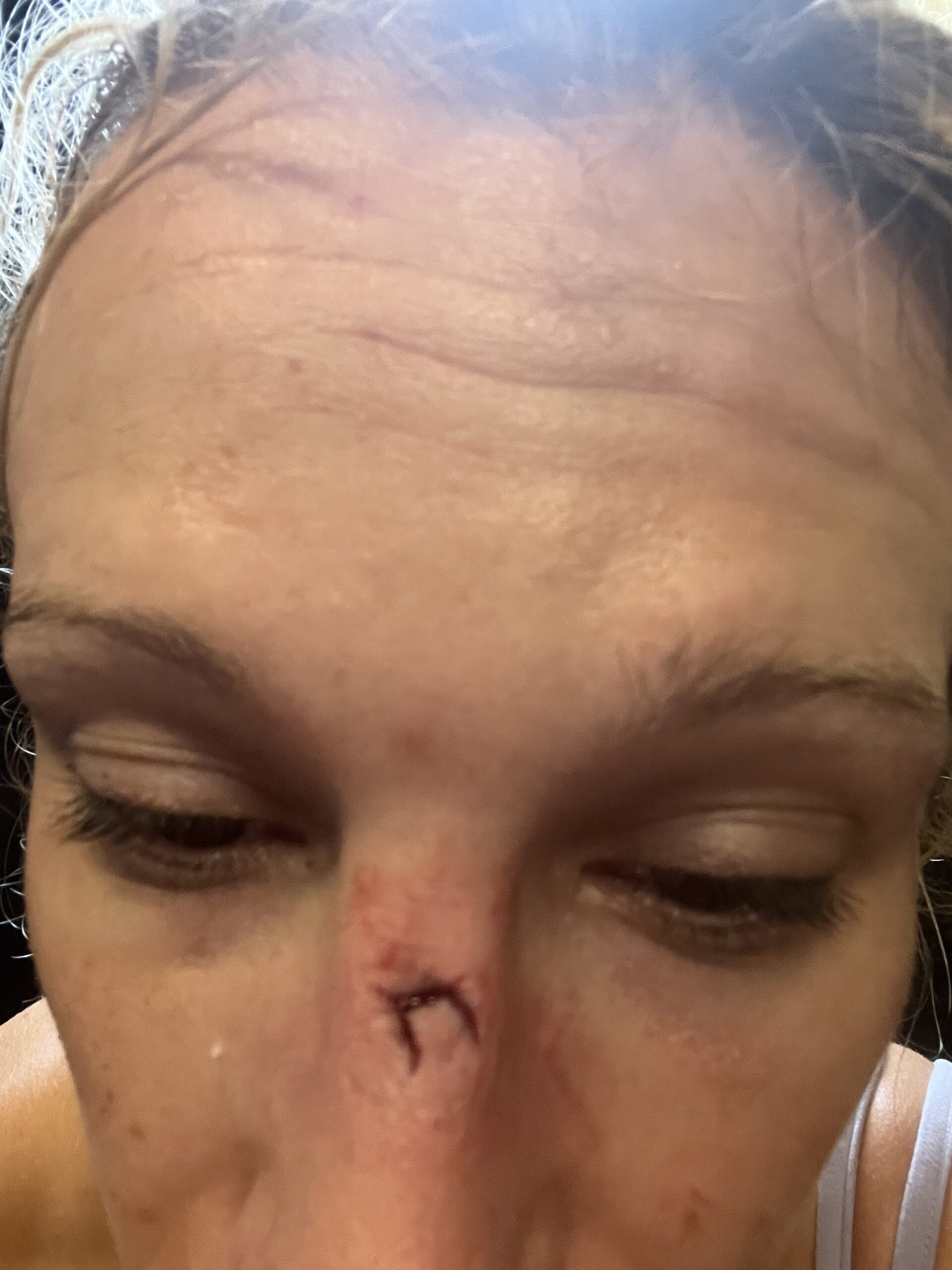
When landed anywhere on the head and face, a knee can cause a concussion and/or laceration. The laceration can coat the area below the wound with blood. It can be enough blood to drip. A knee delivered to the head can also knock someone out. A knee to the thigh can cause the leg to go numb.
Knee to the Groin
Knees to the groin…(sigh). In a self-defense situation, I wouldn’t throw a knee to the groin as a primary means of damage. When adrenaline is high, the pain response diminishes. So, yes, it might hurt but I wouldn’t count on it hurting enough to incapacitate an attacker. I say that as a fifteen-year-veteran of combat sports including Muay Thai and jiujitsu.
A knee to the groin is more productive as a means of bringing the head down. If you have a short character and they want to the bring a taller fighter’s chin down, have the shorter character throw a knee to their opponent’s groin. The taller fighter might lean forward instinctively in defense which makes their chin more available to the shorter character.
Foot Stomp
A foot stomp brings the heal straight down onto the top of the opponent’s foot. It is called a foot stomp because the stomp lands on the opponent’s foot not because a foot delivers the stomp. In MMA, foot stomps happen when the fighters are grappling from standing and not moving around the mat. The stomp can break the opposing fighter’s foot, but I have not once seen that happen. It is generally used to cause the targeted fighter to change their stance or move. Foot Stomp – Graphic with Injury
Foot stomps, especially if the striker is wearing heavy shoes and the target is not, will break the bones of the foot. It’s also useful if the striker is wearing sharp high heels. The high heel can lacerate the targeted foot and maybe break a bone. Even without a laceration or break, the heel stomp will cause terrible pain which could hinder the target from using their foot efficiently. Would they be able to run? Sure. Would they be able to run quickly and smoothly immediately? Doubtful.
I hope this post gives you a few ideas for your fight scene. This is by no means an exhaustive list of strikes outside of punches and kicks. For references on techniques not mentioned here, as well as the types of attacks and injuries that occur with street fights, check out my Writer’s Digest book, Fight Write.
Until the next round with FightWrite get blood on your pages! And, if you are struggling to get blood on your pages, make an appointment with me through Writer’s Digest or contact me directly through the contact form. Together we will make your fight scenes the best they can be. We will confer before the appointment then meet via Zoom. You will get a transcript of what we cover in the meeting and, if you like, the video as well.